
Pharmacist · English Edition
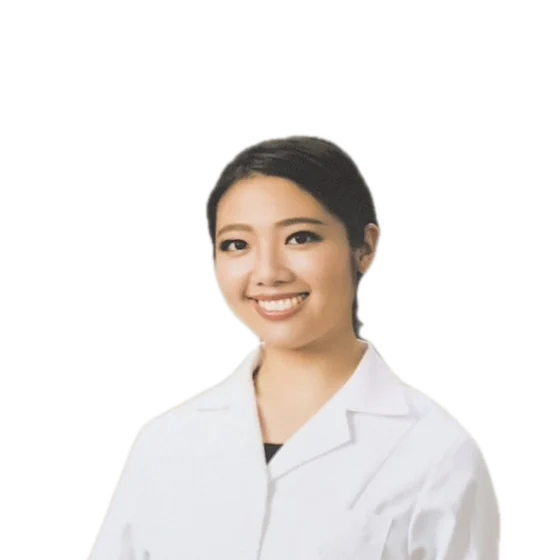
I look after the English edition.
After graduating from the faculty of pharmaceutical sciences at a national university, she worked at a major dispensing pharmacy chain in Japan. She has reviewed beauty products on social media since her student days and is good at explaining complex ingredients in plain words. She is bilingual in Japanese and English. At Japan Medical Press she writes and reviews articles on medicines and beauty, looks after the English edition, and handles our work with medical institutions.
View profile
- Co-payment
- 30% for insured treatment
- Not insured
- Implants, ceramics, whitening, adult braces
- Night or holiday pain
- Search your city's website for 休日歯科診療

Dental clinics are a separate system
In Japan, teeth are treated at dental clinics (shika, 歯科), not by general doctors. Hospital dental and oral surgery departments (shika kōkū geka, 歯科口腔外科) mainly handle difficult cases, such as complicated extractions, that dental clinics refer to them. Most are small private practices run by one or two dentists, with dental hygienists doing cleanings. You do not need a referral. Booking by phone or online is the norm, though some clinics take walk-ins. Look for the words 歯科 or 歯科医院 on the sign. A clinic that also lists 小児歯科 treats children, and one that lists 矯正歯科 offers orthodontics.
What dental treatment does public insurance cover?
If you are enrolled in Japanese health insurance (employee insurance or National Health Insurance), the same rules as for medical care apply at the dentist. Fees for insured treatment are fixed nationally, you pay 30% at the counter, and the insurer pays the rest. Children under school age and people aged 70 and over pay a lower share. [1] Insured dental treatment covers most of what people need: examinations when you have symptoms, X-rays, fillings, extractions including wisdom teeth, root canal treatment, treatment of gum disease, standard crowns and bridges, and resin- or metal-based dentures.
Insurance does not cover treatment that is considered cosmetic or that uses materials beyond the standard. Typical uninsured items (jiyū shinryō, 自由診療) are all-ceramic or zirconia crowns on any tooth (the insured tooth-colored option is a CAD/CAM resin crown, which the fiscal 2026 fee schedule allows on front teeth, premolars and molars [7]), dental implants, whitening, and orthodontics for adults. For these, each clinic sets its own prices, so ask for a written estimate before you agree.

How much does a dental visit cost?
With insurance, a first visit for a toothache — an examination, an X-ray and simple treatment — typically comes to around ¥3,000 to ¥5,000 out of pocket at the 30% rate, and follow-up visits are often ¥1,000 to ¥3,000 each. These are our rough estimates, not official or fixed prices; the total depends on what is done. Uninsured prices vary widely by clinic. As a rough guide only (there is no official price list for uninsured treatment), a ceramic crown is commonly priced from about ¥80,000 to ¥150,000 per tooth, and a single implant from about ¥300,000 to ¥500,000 including the crown.
Why treatment takes several short visits
Newcomers are often surprised that a Japanese dentist does one small thing per visit and asks you to come back the following week. This is normal. Under the insurance fee schedule, each procedure has its own fee, and there are rules about what can be done and billed on the same day. Clinics therefore work through a treatment plan step by step: cleaning one part of the mouth, then another; several sessions to clean and fill a root canal; a separate visit to fit a crown after it has been made. If your time in Japan is limited, say so at the first visit. Some clinics can combine steps, and uninsured treatment is not bound by the same rules.
What to bring and what to expect
- Your My Number card registered as a health insurance card (マイナ保険証), or your eligibility certificate (資格確認書). Without it, you pay the full amount and claim a refund from your insurer later.
- Any medical subsidy certificate (iryōshō, 医療証), for example for a child.
- A list of the medicines you take and any allergies. Tell the dentist if you are pregnant or take blood thinners.
- Cash. Many clinics now take cards, but some small clinics are cash only.
At the first visit, you fill out a questionnaire (monshinhyō, 問診票). Ask whether an English version is available. You will be given a patient card (shinsatsuken, 診察券) to bring to every visit. You pay at reception after each visit.
Toothache at night or on a holiday: where can you go?
Most dental clinics close on Sundays and public holidays (in a 2023 government survey only about one in ten listed Sunday hours), and many also close on one weekday, often Thursday. [8] For urgent pain when clinics are closed, look for the holiday or night-time dental service (kyūjitsu shika shinryō, 休日歯科診療, or yakan kyūkan shika, 夜間急患歯科) in your city. These are run by the local dental association, often together with the city, and usually provide emergency treatment only: relieving pain, stopping bleeding, or dealing with a lost filling. Full treatment has to wait until you can see a regular clinic. Osaka City, for example, has an emergency dental clinic open 10:00–17:00 on Sundays and holidays and 21:00–03:00 every night, and asks you to bring your proof of insurance (your My Number card or eligibility certificate). [3] Koto City in Tokyo instead has local dentists take turns on duty on Sundays and holidays, and asks you to phone before you go. [4]
To find yours, search your city or ward website for 休日歯科診療 or 夜間 歯科, or call the city's medical information line. The service, hours and phone number differ by city, and some cover holidays only, so check before you set out. Toothache alone is not a reason to call 119 (ambulance). Call 119 for serious injuries or difficulty breathing.
Regular check-ups are part of the culture
Japanese dentistry puts a strong emphasis on prevention. Clinics ask patients to come back every three to six months for a check-up and professional cleaning (teiki kenshin, 定期検診). The Japan Dental Association recommends regular examinations that include a check for hidden decay, measurement of gum pockets, removal of plaque and tartar, and advice on brushing and interdental cleaning. [2] When you have a diagnosed condition such as gum disease, these maintenance visits are generally provided under insurance; purely preventive cleaning of a healthy mouth may be charged at the clinic's own price, so ask.
Children
Almost all municipalities subsidize children's medical costs, and dental treatment under insurance is included. In Saitama City, for example, the insured co-payment is covered until the end of the fiscal year in which the child turns 18, while uninsured dental treatment is not. [5] Age limits and whether there is a small fee per visit vary by city, so check with your city office when you register your child. Show the child's subsidy certificate together with the child's My Number card or eligibility certificate (資格確認書) at reception.
Visitors without Japanese insurance
Tourists and short-term visitors pay the full fee, and some clinics set their own rate for uninsured patients, which can be higher than the insurance schedule. Bring your travel insurance details. JNTO's guide for visitors notes that private medical insurance can be bought after arrival and warns that visitors who leave medical bills unpaid may be refused entry to Japan in the future. [6] Ask for an itemized receipt (ryōshūsho, 領収書) and, if your insurer requires it, a medical certificate (shindansho, 診断書), for which clinics charge a fee.
Finding a dentist who speaks your language
The dental filter in the Japan Medical Press hospital finder shows clinics that list treatment in English, Chinese, Korean and other languages: Find a dentist. For every kind of facility, start from the general finder. JNTO's guide for visitors also lets you search medical institutions by area, language and department, with dentistry listed under oral health. [6] At other clinics, a translation app and the phrases below will get you through a routine visit.
Useful words and phrases
- 歯科 / 歯医者 (shika / haisha) — dental clinic / dentist
- 歯が痛いです (ha ga itai desu) — My tooth hurts.
- 詰め物が取れました (tsumemono ga toremashita) — A filling came out.
- 保険は使えますか (hoken wa tsukaemasu ka) — Can I use insurance?
- 自由診療 (jiyū shinryō) — uninsured treatment priced by the clinic
- 見積もりをください (mitsumori o kudasai) — Please give me an estimate.
- 麻酔 (masui) — anesthetic
- 抜歯 (basshi) — extraction
- 定期検診 (teiki kenshin) — regular check-up
- 休日歯科診療 (kyūjitsu shika shinryō) — holiday dental service
Frequently asked questions (FAQ)
Do I need an appointment to see a dentist in Japan?
Not always, but booking by phone or online is the norm. Walk-in patients may wait a long time or be asked to come back another day, especially at busy city clinics.
Is wisdom tooth removal covered by insurance?
Yes. Extractions, including wisdom teeth, are covered by insurance at the usual 30% co-payment. Difficult cases may be referred to a hospital oral surgery department, which is also covered.
Can I get all my treatment done in one visit?
Usually not. Insured dental care in Japan is delivered in short steps over several visits because of how procedures are billed. Tell the clinic at the first visit if your time is limited; some can combine steps.
Are dental implants covered by Japanese health insurance?
No. Implants are uninsured treatment and each clinic sets its own price, so ask for a written estimate. Standard bridges and dentures are the insured alternatives.
Sources
- Ministry of Health, Labour and Welfare — Patient co-payment ratios under public health insurance (医療費の一部負担(自己負担)割合, Japanese) mhlw.go.jp
- Japan Dental Association — Get regular dental check-ups (歯科健診を定期的に受けよう, Japanese) jda.or.jp
- Osaka City — Holiday and night-time emergency dental clinic (休日・夜間緊急歯科診療所, Japanese) city.osaka.lg.jp
- Koto City, Tokyo — Holiday medical and dental services (休日診療・休日歯科診療のご案内, Japanese) city.koto.lg.jp
- Saitama City — Child-rearing support medical expense subsidy (子育て支援医療費助成制度, Japanese) city.saitama.lg.jp
- Japan National Tourism Organization — Guide for when you are feeling ill (medical institution search and travel insurance) jnto.go.jp
- Ministry of Health, Labour and Welfare — 令和8年度診療報酬改定の概要【歯科】 (p. 56, CAD/CAM冠及びCAD/CAMインレーの適応拡大) mhlw.go.jp
- e-Stat (MHLW) — 令和5年医療施設(静態・動態)調査 全国編 第180表 歯科診療所数(重複計上),表示診療時間・開設者・救急医療体制(再掲)別 e-stat.go.jp
Didn't find what you needed? Ask JMP AI →
This article is for general information only and is not a substitute for professional medical advice, diagnosis, or treatment. Always consult a qualified physician.